Preservation in Practice
How preservation looks at Ómós and how it weaves its way into our menu
Our fermentation room is always the first thing to catch people’s eyes. The allure of fermenting vessels, meats hanging, vacuum-packed bags, air-locked jars and wine bottles that speak to each person differently. As one individual stares in awe at the dry-aged beef, others keenly spot wine producers they recognise, while the eagle-eyed note the fermentation and preservation tag descriptors. This is our shrine to preservation, fermentation and all that these processes enable us to do, as well as the flavours that they allow us to unlock - be it koji that we’ve been inoculating every week sitting next to wine that was fermented spontaneously with indigenous yeast, or those garums and miso where patience is proving ever so much a virtue. Our preservation room houses everything from Guinness miso to buttermilk garums, as well as lacto-fermented koji waters, dried meadowsweet, and some house cassis that we’ve been working on. As shelf space becomes a premium, there is a battle between what requires more floor space - those Christmas kirs yet to come or the various koji experiments for our autumn menus. It’s proving difficult to choose a winner.
As chefs, our notion of fermentation is one that can often be warped by bible-sized books and experimental ideas that we can’t wait to put into practice. Yet fermentation and preservation are things we’ve found people have a unique, personal and situational connection to. Let’s not forget preservation was first the reserve of economic and nourishing necessity. We have had guests talk us through their kimchi trials and tribulations, accidental ferments gone wrong, their takes on kvass, as well as some dubious garden syrups that have been added to gin and tonics. Seeing those kitchen techniques that were re-championed in the 2010’s never having lost their place in the larders of so many guests really pushes home the notion that nothing is ever new, just re-adapted in the professional kitchen.
Our preservation programme began back in Autumn 2025 with the help of our good friend Dr. Johnny Drain. Some preserves have been in the works for a long time - whether it be tinkering with ideas or experiments - longer than we’d care to admit. Seeing these take shape on plates leaving our kitchen, with ingredients once treated as side notes now standing as the core of a dish, is a joy to see. It’s a reminder that so much of what ends up on a guest’s table started as something far rougher: a jar in the test kitchen, a scrawled note, or a half idea that didn’t quite work out the first three times we tried it.
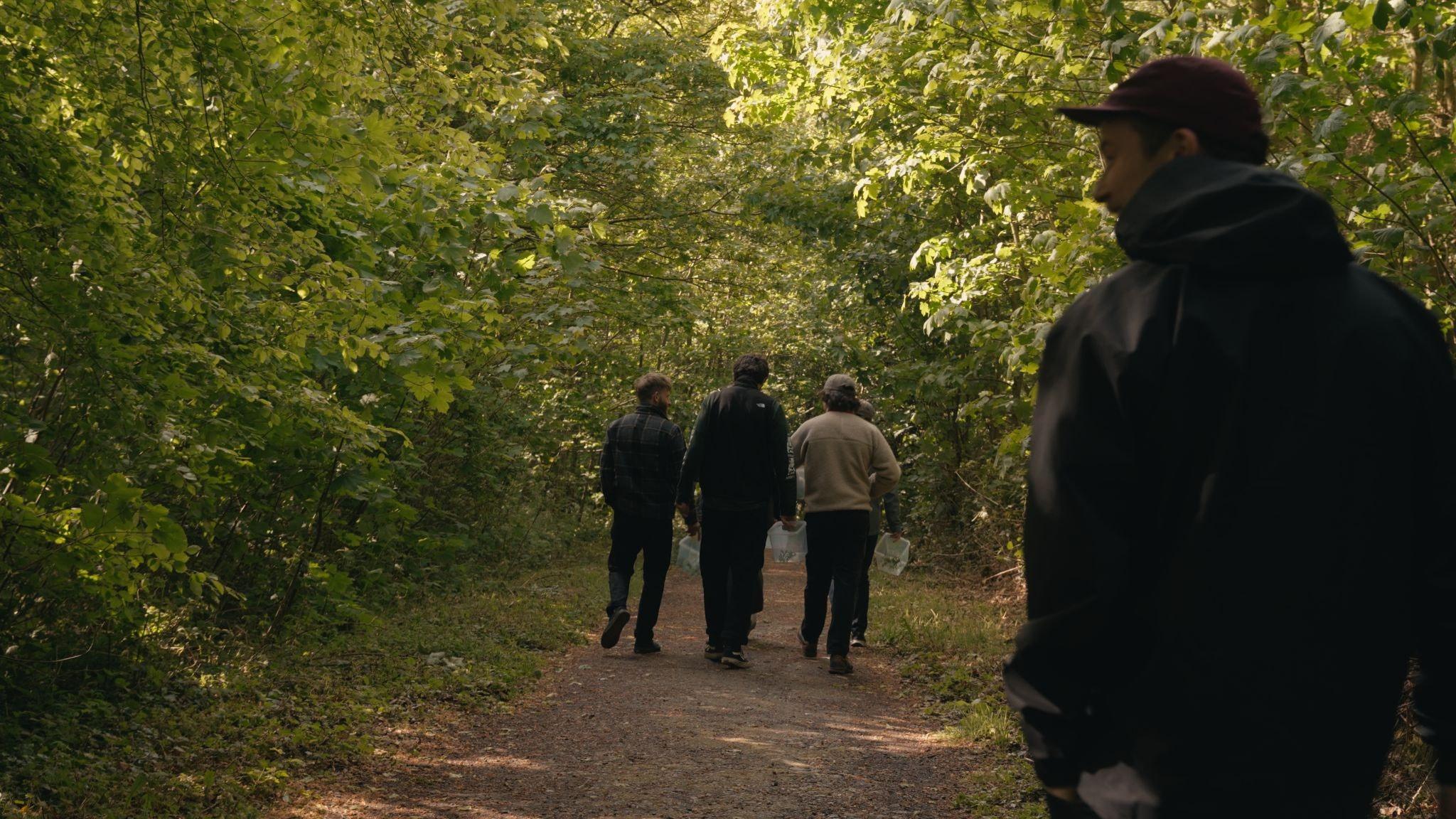
Some ingredients behaved exactly as we’d hoped, others taught us more through failure than any cookbook could. What started as a somewhat theoretical exercise has become something closer to a living larder - one that has already begun to change with the seasons, with what the garden gives us, and with what our foraging trips bring back some weeks unannounced. If anything, the matrix has become less about control and more about attention. Preservation, we’re learning, rewards those who pay attention far more than those who plan perfectly.
More from the journal